What to Show on Drawings for a Rubber Lining Quotation
Show lining boundaries, equipment details, access and drawing revisions clearly so a rubber lining supplier can prepare a more useful quotation.
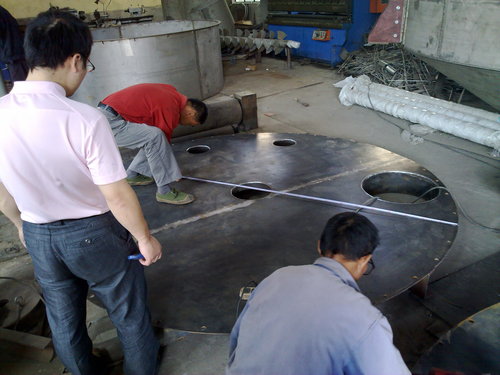
A drawing helps a supplier understand the shape and extent of a rubber lining project. It works best when the lining boundary is visible and the drawing is accompanied by an operating brief. Geometry alone does not establish material suitability.
Mark the surfaces to be lined
Highlight the internal surfaces, nozzles, flange faces, covers and other areas included in the enquiry. Mark areas that are excluded. Show dimensions, units, substrate material and equipment identification where known. If an area figure is approximate, label it as an estimate and explain whether the supplier should verify the quantity.
Include details that affect the work
Provide sections or detail views for openings, connections, internal attachments and changes in shape. Show how the equipment can be accessed and whether components can be removed. For existing equipment, add photographs and identify old lining, visible damage or deposits requiring assessment. A photograph supplements a drawing; it should not silently replace missing dimensions.
Separate requirements from proposals
If the design already specifies a lining system or thickness, identify that requirement and its source. If selection is still open, ask the supplier to propose a system for review. Keep proposed seams, termination details and installation arrangements clearly marked until they are agreed. Do not present an unreviewed sketch as an approved fabrication instruction.
Control revisions before ordering
Use a drawing reference and revision label in the enquiry. Keep a record of questions and corrections, and ask the supplier to list the drawing revision used in its quotation. When the geometry or scope changes, obtain confirmation of the effect on quantity, price and schedule.
Send the latest drawing package with the contact medium, operating conditions, project location and required supply scope. Confirm the final drawing and responsibilities before procurement or construction begins.
Connect drawings, materials and installation scope
A clear project description helps you understand different suppliers’ proposals.
Service description
Medium, temperature and equipment use
Drawings & photos
Dimensions, lining boundaries and site conditions
Supply & installation
Materials, related products and responsibilities
Review the proposal
Timing, inspection and handover requirements
FAQ
Can I request an initial quotation without a complete drawing?
Yes. Provide a labelled sketch, available dimensions and photographs, and explain what is missing. Ask which assumptions affect the preliminary offer and what must be confirmed before ordering.
Should every internal component be included in the lining area?
The drawing should state which components are included and excluded. Ask the supplier to review unclear boundaries rather than assuming all internal surfaces are part of the same scope.
Continue your research
Published guides that address the next decisions in your lining project.
Ordering Cut EPDM Sheet Parts: A Drawing Handover Checklist
Request cut EPDM parts with a clear drawing revision, finished dimensions and delivery list. Avoid confusing roll supply, rough blanks and finished components.
Read guide
Choosing an NBR Rubber Sheet Supplier: Grade, Samples and Batch Checks
Shortlist an NBR rubber sheet supplier by checking the quoted compound, actual fluid conditions, representative samples and batch documents before purchase.
Read guide
Rubber-Lined Valve Suppliers: New Valve or Relining Enquiry?
Looking for a rubber-lined valve supplier? Define whether you need a complete valve, a replacement liner or assessment of an existing valve before requesting quotes.
Read guide