Choosing a Rubber Lining Manufacturer: Check the Factory and the Compound
Qualify a rubber lining manufacturer through compound identity, factory responsibilities, batch records and sample alignment before comparing supply offers.
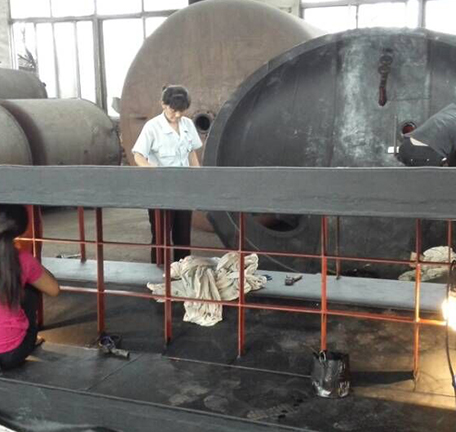
Choose a rubber lining manufacturer by connecting the proposed product to a named production source and verifiable supply records. A factory photograph, a broad product catalogue or the word “manufacturer” is not enough to qualify a particular compound. The goal is a clear decision on the proposed supply, not a collection of impressive documents.
Identify the actual manufacturing chain
Ask the seller which legal entity makes the sheet, where the offered material will be produced and who controls its formulation. Clarify whether the seller manufactures, distributes or combines products from other businesses. None of those roles alone proves or disproves suitability, but the responsibilities should be visible.
Request one contact responsible for technical questions and another for commercial fulfilment. Confirm who must approve a change of production source or compound after the purchase order.
Request evidence tied to the offered product
Blair's quality-assurance page lists dimensional checks and sample inspection. Use that limited example to ask how your proposed supplier verifies its own delivery; do not assume identical procedures.
Seek a document trail that connects the quotation, compound designation, sample and supplied batch. Ask which records accompany each shipment and which are available on request. A certificate for a different product or unrelated production site should not settle the qualification decision.
Compare the sample with the documents
A sample is useful only when its identity and review purpose are clear. Ask whether it represents the offered construction or merely illustrates appearance. Record the reference used for the sample and require an explanation of any difference from the quotation.
Separate a visual or handling review from approval for the intended service. If a further assessment is needed, agree its question, reviewer and decision point before committing to supply. Do not treat an attractive sample as a substitute for technical confirmation.
Build a practical qualification record
Give the shortlist a consistent set of questions, then record answers as confirmed, unresolved or unacceptable.
- Is the manufacturer and offered compound identified?
- Can the shipment be linked to agreed product records?
- Who reviews substitutions and technical enquiries?
- Are packaging, delivery and document responsibilities clear?
Keep unresolved issues visible instead of averaging them into a reassuring score. Request an explanation where evidence conflicts. An audit, if needed, should address a specific gap rather than simply produce another visit report.
Avoid common mistakes before ordering
Do not approve every product in a catalogue because one sample was accepted. Do not use a manufacturer's general certificate as evidence of project-specific compatibility. Installation qualifications are also a separate question from sheet manufacture.
Record the approved product, source and change-control conditions in the order. Review our rubber lining material overview when preparing the enquiry.
References: Blair quality assurance and Blair field installation.
Move from a material name to a complete specification
Organize the conditions first, then compare the specific compound and complete system.
Service conditions
Medium, concentration, temperature and operation
Exact compound
Grade, current data and suitability evidence
Complete system
Substrate, bonding products and installation
Written agreement
Requirements, limits and outstanding questions
FAQ
Must the seller manufacture every component?
Not necessarily. Clarify who makes each offered item and which business is responsible for technical confirmation, supply records and changes.
Does accepting a sample qualify the entire catalogue?
No. Record the specific product and the purpose of sample acceptance. Another compound or construction needs its own review.
What should remain in the qualification file?
Keep the approved product and production source, supporting records, unresolved conditions and the agreed process for substitutions.
Continue your research
Published guides that address the next decisions in your lining project.
Defining Rubber Lining Material and Installation Scope
Define whether your rubber lining enquiry covers materials, compatible accessories or installation, and agree the responsibilities before placing an order.
Read guide
Rubber Lining Thickness: Write a Clear Purchase Specification
Agree rubber lining thickness, layer construction, local details and acceptance checks with the supplier instead of choosing a universal value.
Read guideRubber Lining Material Selection: Compare Compounds, Not Labels
Compare rubber lining compounds using the full service profile, supplier evidence and installation requirements instead of broad material labels.
Read guide